
Brittany Greenfield
September 18, 2025
From Weak Link to First Line of Defense: How DevSecOps Turns Teams into Security Partners
We’ve all heard it: People are the weakest link in cybersecurity.
And in software development, it often feels true—developers skipping scans to hit a release date, ops teams spinning up environments without the latest patches, project managers pushing to deliver features before the security checklist is complete.
But here’s the shift: people don’t have to be the weakest link.
When you embed security into the development lifecycle, your teams stop being security bottlenecks—and start becoming proactive partners in resilience. That’s the promise of DevSecOps done right.
The Problem with “Security-First” in Software Development
Too often, security in the SDLC is treated as an afterthought. Security teams set policies, development teams receive generic training, and everyone is told to “be security-first.” But when deadlines loom, security steps are the first to get skipped.
Why? Because the process asks too much of people. Developers are expected to know every security requirement, ops engineers are expected to juggle patching with uptime, and compliance teams are left chasing down documentation after the fact. Everyone is responsible, but no one is equipped.
The result: tension between development and security, where “weakest link” thinking thrives.
The DevSecOps Shift: Right Info, Right Time, Right Workflow
DevSecOps isn’t about turning every developer into a security engineer. It’s about making security part of the workflow, not an extra layer of work.
That means surfacing the right security information at the right time:
- Developers receive automated guidance in their IDEs or CI/CD pipelines before a vulnerability ever ships.
- Ops teams get security controls embedded directly into deployment workflows—so patching isn’t a side task, it’s part of the process.
- Compliance requirements are automatically checked and tracked as code moves, without manual overhead.
When teams don’t have to stop and remember security, they can just do security. And that’s how they become partners instead of points of failure.
Where Wabbi Fits In
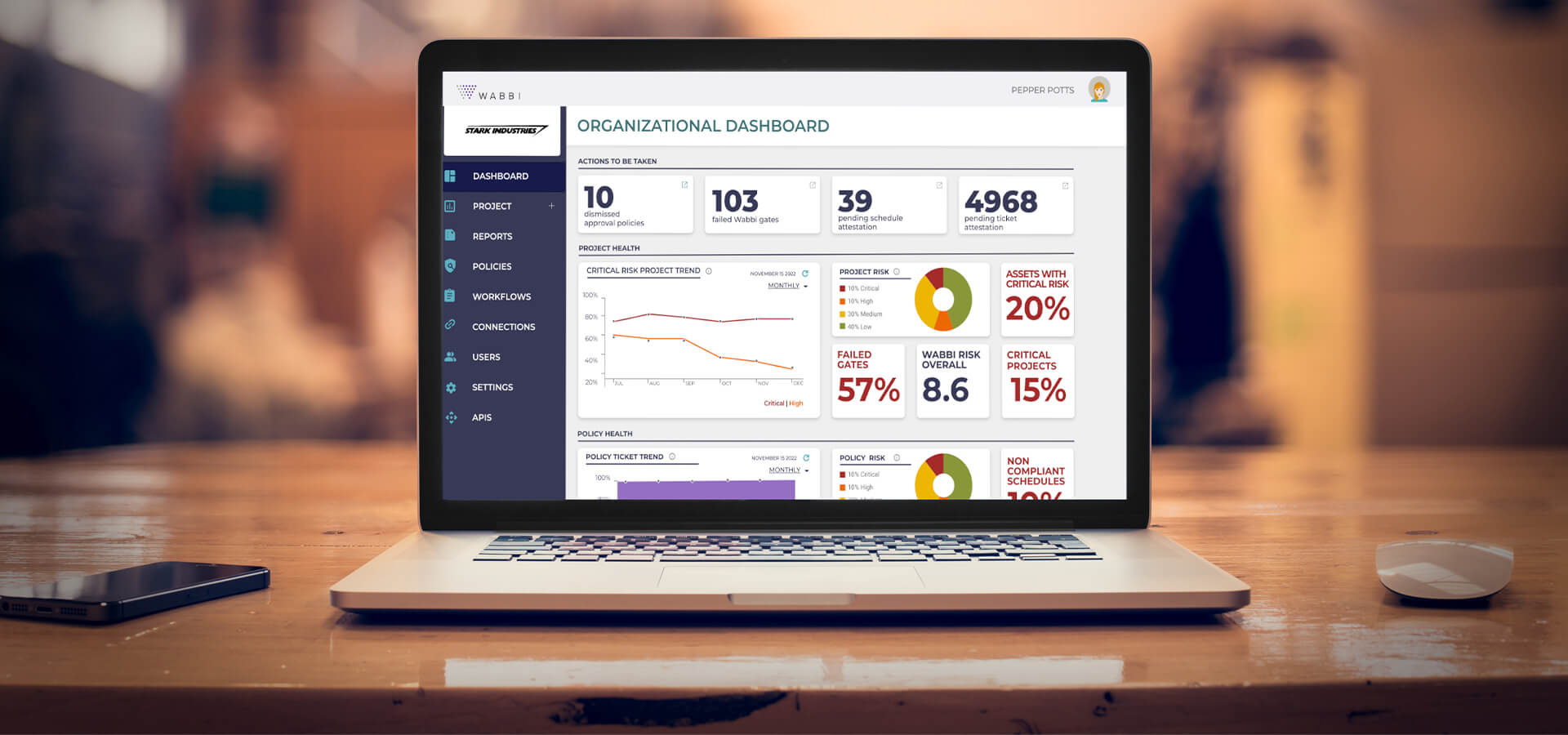
This is the philosophy Wabbi was built on. Our Continuous Security platform orchestrates security across the SDLC, embedding controls, requirements, and remediation steps exactly where teams need them—inside the tools they already use.
Instead of making developers memorize policies or ops teams chase spreadsheets, Wabbi ensures that:
- Security gates are automatically applied at build and deployment.
- Policies are enforced in real time, without slowing down velocity.
- Compliance data is captured continuously, creating an audit trail by default.
With Wabbi, security becomes part of the development DNA—not a roadblock at the end. That’s the difference between a “security-first culture” in theory, and DevSecOps in practice.

Why This Matters Now
As software supply chain attacks, AI-driven exploits, and compliance requirements grow more complex, the weakest-link mindset is no longer sustainable. Businesses can’t afford to treat security as an add-on that people are expected to manage manually.
By aligning people, process, and technology through DevSecOps—and letting platforms like Wabbi handle the orchestration—you give teams the freedom to focus on building while ensuring security is never skipped.
That’s how you turn the “weakest link” into your first line of defense—and build resilient, secure software at the speed of business.